
WORK, WORDS, and WOLVES
Sometimes you have to get out there and get your hands dirty

Hey everyone!
Heads up: This is not going to be a normal post! I wanted to touch bases to let you know that I’ll be back at my desk and in the studio this week creating my more usual carefully crafted essays and podcasts as they pertain to events in our world today. So if this is your first essay from me, know that you will be receiving one of those stories from the WILD soon. But this is a special edition urging you to immediate and specific action, something I haven’t done before, but need your help with for success.
First, I want to mention that today, I’ll be standing up with a few friends for a good leader in Colorado at a big Dem event—and that leader is the current Secretary of State of Colorado, Jena Griswold, now running to be our next Attorney General. Jena has been a true fighter for democracy, justice, and free and fair elections, and she has stood up to the Trump administration countless times, even with a target on her back. It’s important to support those leaders who are taking risks to counter the tyranny in D.C. I urge everyone to get involved to support those who are taking the risks and showing the courage to run and the commitment to serve.
It’s also important to stand up against the elected leaders already in office who are failing to stand for the people.
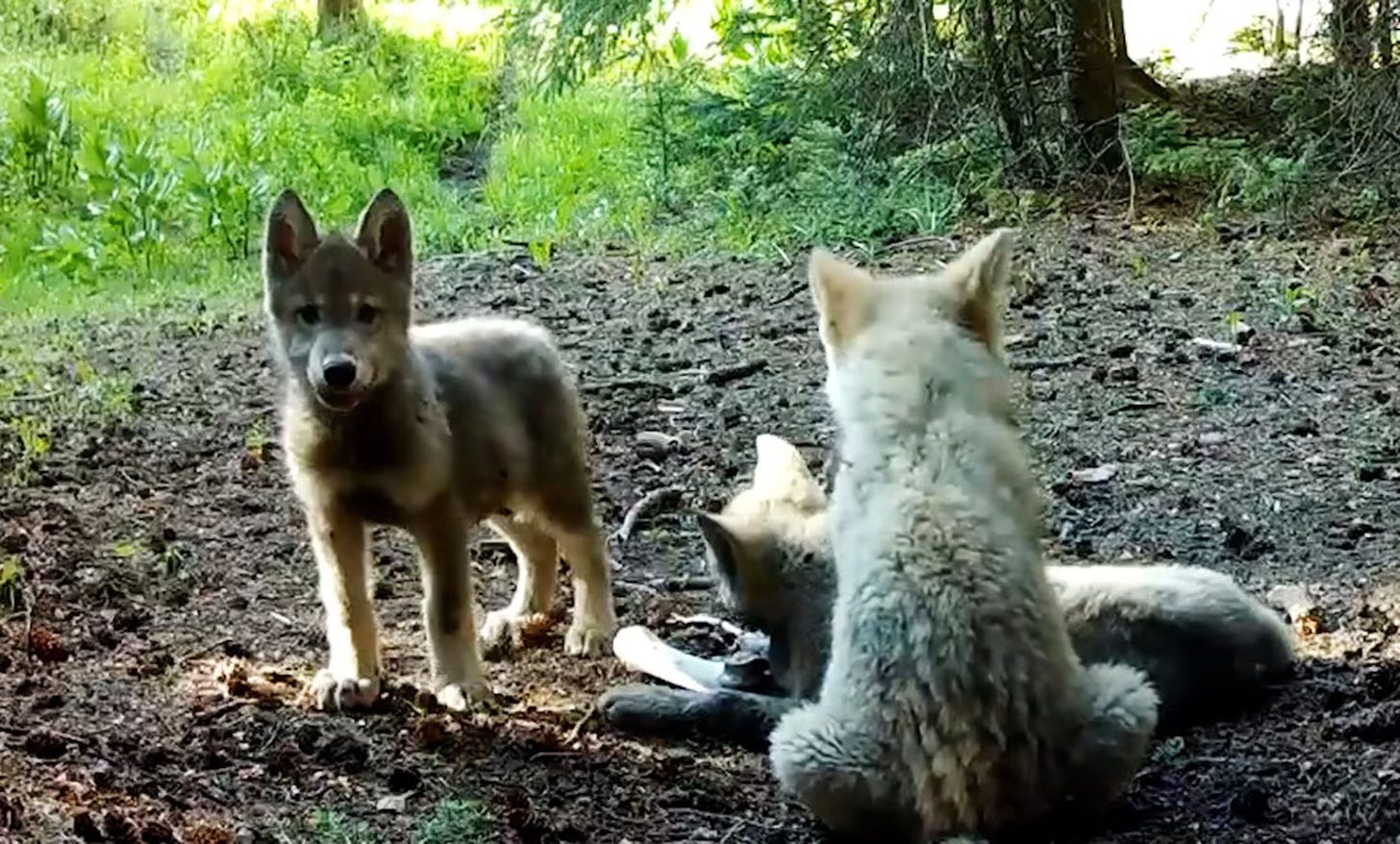
In that regard, I’m asking each of you who is willing to take action on behalf of the Wolf Reintroduction Project in Colorado, a project which—despite a majority vote from the citizenry to create this project—Senator Michael Bennet wants to put on pause, and allow the handful of wolves who have survived in this program to just die. I’m pretty sure there is some big money talking through his weasel-out...and no respect and love for the environment or for Colorado’s nature/outdoor adventure/tourism economy, which is driven by our beautiful ecology and wild, natural habitats.
Below, our friends at Western Watershed Project have provided some background information:
In an interview this week, Senator Michael Bennet said he supports a “temporary suspension” of Colorado’s wolf reintroduction program. That would halt the voter-mandated effort that is still in its earliest phase.
Since releases began in December 2023, Colorado Parks and Wildlife has brought 25 wolves into the state. As of February 2026, 12 of those animals are dead — a mortality rate of just under 50 percent. Several were killed by officials following livestock conflicts. Others died after crossing into Wyoming, where protections are weaker, or from conflict with mountain lions, complications from illegal gunshot wounds, or vehicle strikes.
Those losses are being cited as evidence that the program is not working.
But wolves belong in Colorado. They were deliberately eradicated in the early 20th century to protect the livestock industry. Restoration takes time, especially in a state like Colorado where large areas of public and private land are still managed primarily for cattle and sheep.
Conflicts between wolves and livestock are not unforeseen. Indeed, they were expected, and the original ballot initiative built in a requirement that ranchers would be fairly compensated for their losses when the inevitable few cattle, sheep, or working dogs were killed.
Wolves must learn to survive in a landscape where domestic livestock far outnumber native herbivores that are their natural prey, and where wildlife managers must implement a complicated set of rules that apply to the wolves, that the wolves themselves have no way of understanding. Meanwhile, they must also navigate a livestock industry bent on undermining and ultimately destroying their recovery.
Colorado’s wolf plan anticipated a multi-year release process to build their population. That process is incomplete. This year’s pause in new imports is tied in large part to federal restrictions on sourcing wolves, not to a biological determination that recovery is impossible or that the program is broken. The CPW Commission has denied two livestock industry petitions to pause reintroductions, demonstrating confidence in the program.
Calling for a suspension now does two things: It validates the claim that conflict with livestock is a reason to stop restoration rather than a management issue to address, and it puts an elected official at odds with a decision made directly by Colorado voters.
If there are problems with implementation, the remedy is to improve implementation, not to stop.
So, if you’re new, (or even if you’re used), know this is not my usual format. I have posts and pods already lined up to do when I’m back to my usual routine this coming week, and thanks to all of you for your patience with me while I’ve been away from my writing desk and the studio while doing this important work.
In the meantime, I’m going to leave you all with some action items you can take to protect wolves, wildlife, and endangered species if you live in Colorado. Even if you live in another state, you can take some of the actions recommended below. Thank you for your help to preserve the WILD.
Senator Bennet needs to hear from Coloradans who expect the state to follow through on what voters approved. Please make two calls to his office today.
Ask Senator Bennet to withdraw his support for suspending Colorado’s wolf reintroduction program and instead to publicly support continuing the wolf reintroduction program.
First, call his office in Washington, DC: 202-224-5852.
Then, follow up that call with your closest local office:
Southwest (Durango): 970-259-1710
Southeast (Pueblo): 719-542-7550
Northwest (Grand Junction): 970-241-6631
Pikes Peak (Colorado Springs): 719-328-1100
Denver: 303-455-7600
Tell Senator Bennet that the answer is NOT a temporary suspension!
Tell Senator Bennet that:
Colorado’s wolf reintroduction program is in its infancy – suspending the reintroduction would put Colorado’s few wolves at risk of loss by undermining their ability to disperse and find a mate and form new packs to grow the population.
What would improve Colorado’s Wolf Program is Encouraging ranchers to use nonlethal coexistence tools would prevent conflict which would prevent the loss of both livestock and wolves.
Loss of livestock to wolves and the death of 12 of the reintroduced wolves, at least 6 of which were due to humans, is being given as evidence that Colorado’s reintroduction isn’t working. When ranchers put their livestock onto public land unattended, they should expect that a few will get taken by predators including wolves, cougars, bears, coyotes, eagles and vultures.
Wolves are not criminals when they predate livestock – they don’t know or understand our arbitrary and unscientific rules.
Ranchers on the other hand do know the rules and they know that Nonlethal Coexistence works to prevent conflict between – but first they must be willing to use those nonlethal tools.
Wherever you live in the U.S., please call Senator Bennet’s office in Washington, DC today: 202-224-5852.
I can’t thank you all enough for your support, your hard work, the community you’ve helped to create here, and the loving comments and feedback you offer. I’ll be back with a more usual post in a matter of days!
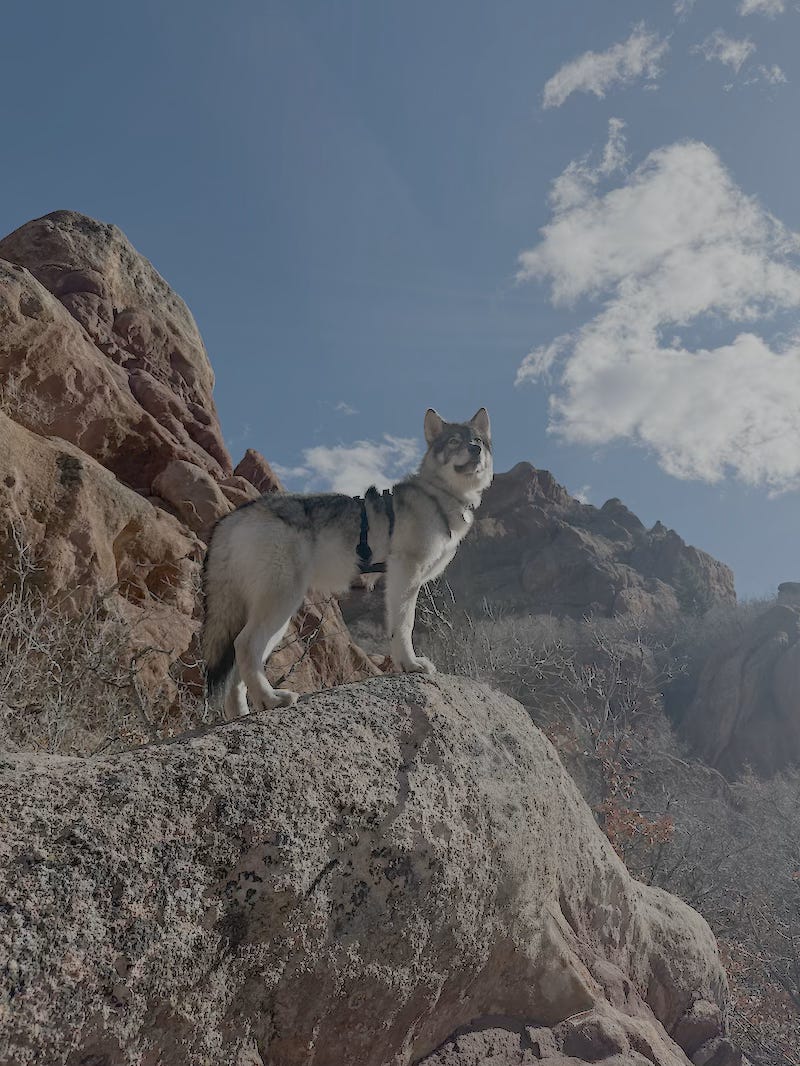
In the meantime, here’s a photo of our rescued/adopted wolf cub companion Zuni at ten months on a hike in the Rockies.
Thank you for educating us about Senator Bennet's position supporting the withdrawal of his support for Colorado's wolf reintroduction program. The wolf reintroduction program is a complex environmental initiative. I sent a message to Senator Bennet requesting he reconsider his pause in support for this complex voter approved initiative.